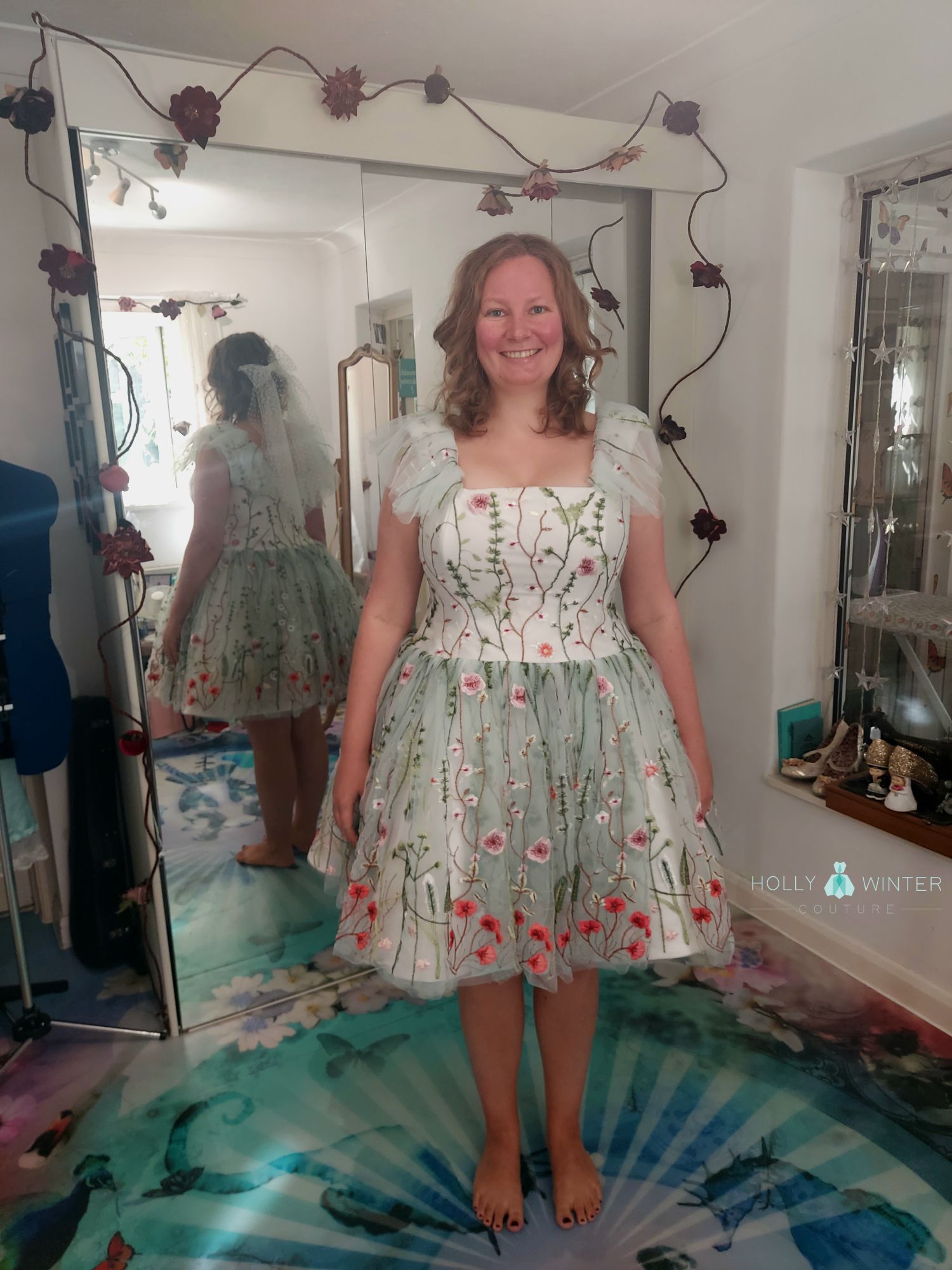
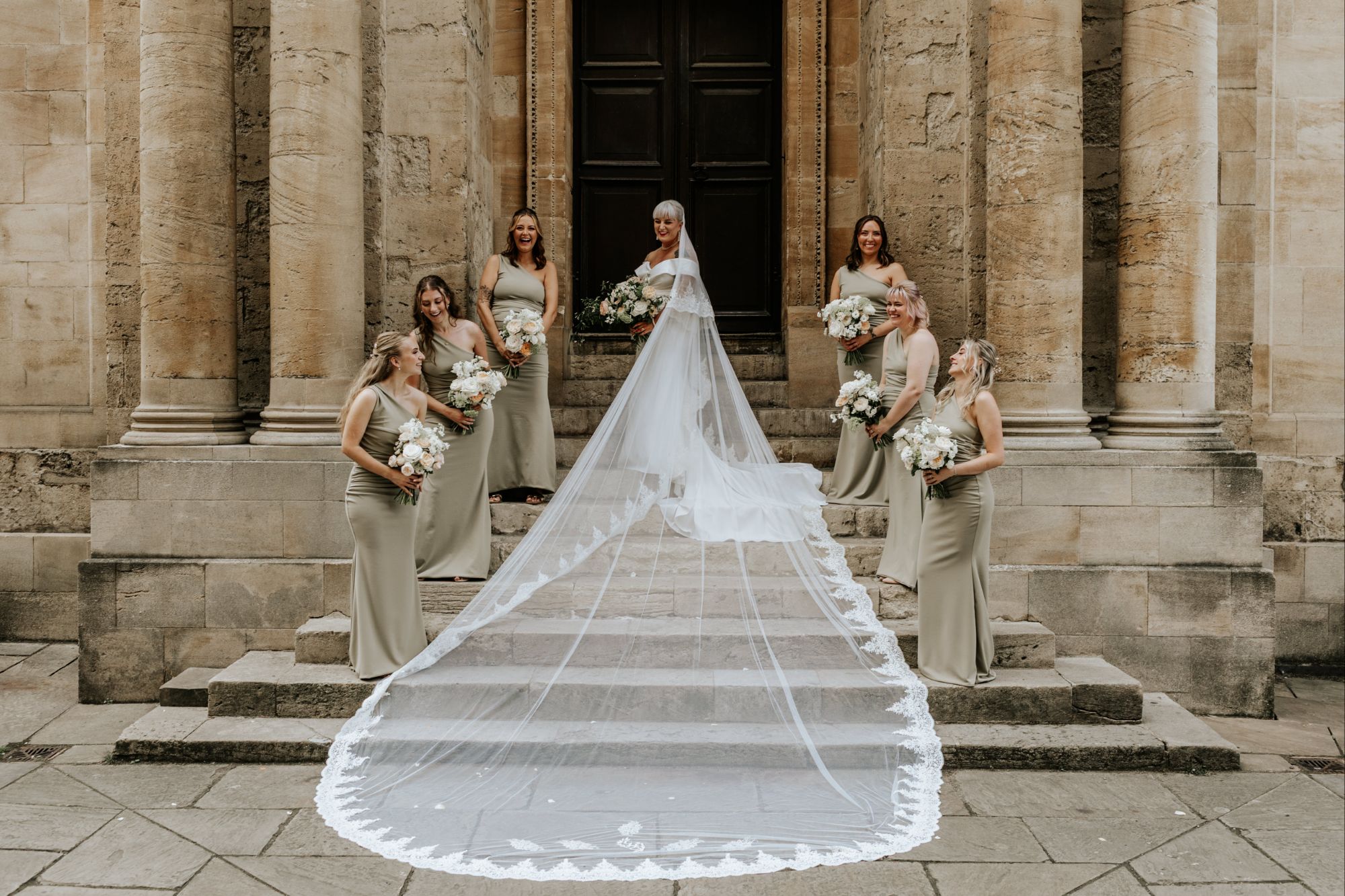
I’m doing this not just for price transparency but also because smashing the pay taboo helps everyone get the pay they deserve. And I am self-employed so I have the privilege of no boss to get in trouble with.
This veil was easier to work out my hourly rate because, unlike Happily Ever After in my previous attempt, the embroidery machine is not involved so all the work is me.
In this case, my customer was based in the UK (like me) and paid £200 for her veil on Etsy. Etsy then helpfully gives me a breakdown of fees to show my actual earnings on this sale – £178.16.
However, it doesn’t explain why only £157.52 arrives in my bank account. If anyone more familiar with the inner workings of Etsy, HMRC or maths in general can explain where the missing £20.64 went, I’d be grateful. I’ll even send it to you if you show me how to recover it.
The payment on my bank statement.
The cost of the fabric, crystals, beads, comb, thread etc bring this figure down another £40, to £117.52, while postage and packaging costs drop it a further £15.05, to £102.47.
I set my stopwatch to see how long it actually took me to make this veil, from cutting out the fabric, through edging it, to hand-stitching 18 crystals and hand-beading the 3-D spider. Including parcelling it up at the end, it was two hours and 14 minutes, so my hourly earnings were £45.54. Not half bad, but still short of the £75 hourly rate I generally base my prices on.
And for extra fairness, I stopped the timer to make my cup of tea.
How much of the cost of a veil actually lands in my pocket? The answer, it turned out when I tried to work it out, is not straightforward. I’m not sure whether I was surprised by the figure I kind of landed on, but I found it interesting enough to share it.
This example is based on an Etsy order I received before Christmas for a fingertip Happily Ever After veil.
Woohoo! A new order!
With the local taxes in the customer’s US homeland, the total paid by them Etsy was £421.20 (~$567.72 US).
Before the money leaves Etsy, there are a few immediate deductions, which Etsy very kindly lays out:
Fees laod out by Etsy
I get a little confused here because if you take that £83.58 away from £390 (after tax), you get £306.42 (right?!), but what lands in my bank account a few days later is actually slightly more, £310.52. Where the extra £4.10 came from is anyone’s guess but I’m not complaining, especially in low season.
The mystery figure that landed in my bank account
Either way, I then have some more hard costs to cover:
Hard costs for shipping and packaging
I use (almost award-winning; highly commended in the Quirky Awards 2023) sustainable packaging from Tishwish, Royal Mail’s international tracked & signed service with extra insurance, plus the new US 10% import duty (and Royal Mail’s 50p fee for handling this for me). All this brings what landed in my.bank account down to £242.52.
That’s before I even buy the materials for the veil itself.
Hard costs for veil materials
I make enough veils that I can buy many of these in modest bulk – not exactly the economies of scale big manufacturers see, but, for example, I can halve the cost of tulle by buying it in 50m rolls, knowing I’ll get through it. So, the cost of the raw materials of this particular veil are £26.52, just under 7% of the purchase price, bringing the total going to me to £217.
So let’s consider the time it takes to turn a pile of tulle, thread and ribbon into a Happily Ever After fingertip veil. It takes approximately three days to cut, embroider, sew and assemble to completion, so call it 24 working hours, based on an eight-hour working day.
I set my hourly rate at £75, but the time taken to make this veil for £217 slash that to just £9 per hour, which isn’t even minimum wage.
How much per hour
However, most of the time required to make this veil is for embroidering which my machine (theoretically at least) can mostly get on with without me. So, let’s say only a quarter of those three days requires me hands on. That brings my hourly rate to a more palatable £36 per hour, but still less than half what I should be charging (more on this here).
But, and here’s where it gets a bit tricky to calculate again, we need to consider the cost of that beautiful embroidery machine, and all the other equipment I need to make the veil.
What I bought to make my veils
Embroidery machines are EXPENSIVE. I bought mine, an entry-level industrial multi-needle embroidery machine (swoon), for £6,000 a couple of years ago. It literally cost six times more than I paid for my car (priorities, my queens). For context, the next model up is £10,000. Even my first (now back-up) embroidery machine was £1,200 seven years ago, and that only has a single needle, meaning I have to rethread it myself for every colour change, which is every three minutes or so for this veil.
The software I use to create and edit my embroidery designs was £900 and I’ve since paid a further £250-ish for the latest edition. There’s also my Cricut (£300) which even actually works sometimes, but I do have to swear at it a lot first.
A few further costs not included in the image above are my business insurance (public liability, professional indemnity, stock in trust, etc) which is another £500-odd a year; machine servicing at around £200-300 a year and miscellaneous business costs including phone/WiFi bill, mortgage, etc.
As tricky as it is to put a fair price on my work, I think I usually get it about right. I only employ myself and I feel well compensated, so that’s a decent measure, plus I absolutely adore my job.
If you think I should be earning more for what I create, please consider that the next time you see a veil or wedding dress on an ultra-fast fashion site for next to nothing, and think about what the person who actually made it will earn from it.
For the second time this week, I’ve seen a video (a different one this time) recommending lidocaine spray to brides so they don’t feel their painful wedding shoes.
Lidocaine is a local anaesthetic, so a liberal spray all over the feet will numb them to pinching, pressure points from heels and rubbing.
I don’t doubt that it works but can we please STOP normalising wearing things that hurt?! And it’s ALWAYS for women.
What you wear on your wedding day – shoes, dress, corset, etc – should allow you to to walk, dance, sit, stand around, eat and ENJOY your day.
I had a bride in for her final fitting once who was looking concerned as she moved in her dress in front of the mirror. I could tell something was wrong and was scrutinising her corsetted dress for the cause of her consternation. It looked perfect and I was started to panic, first that I’d don’t something wrong and second that I couldn’t even figure out what it was.
Eventually, she said hesitantly, “Is this actually right? I wasn’t expecting it to be… comfortable!”
Weddingwear is not designed primarily for practicality in the same way as gym kit, but it shouldn’t be uncomfortable and certainly never painful. For all sexes.
Seriously, can you imagine telling a man to spray his feet with anaesthetic so he can tolerate his wedding shoes?
Should I store my wedding dress hanging up, in a box or some other way?
I’m often asked what the best way to store a wedding dress is, between buying and wearing it on the day (I’m not talking about preserving it after the wedding – that’s a whole other field). They’re big, don’t fit in many wardrobes and you’re probably also having to hide it – something the size of a person – from your other half.
Special shout-out to my recent bride who kept her wedding dress in the bottom of a laundry basket, partly because it was second hand and didn’t come with a bag or box, but mostly because she knew her financé would never find it there.
The best storage method depends partly on the type of dress you have, how voluminous it it, how long the train is, and the fabric(s) it’s made from. Generally though, these are, in order, the best ways:
1. On a Mannequin, Under a Dustsheet
The gold standard, but turn off the lights and put a sheet over it 👻
This is the gold standard of wedding dress storage, but unless you live in a stateley home and happen to own a mannequin set to your own measurements, it’s not practical for most people. If you actually do have a spare room with a mannequin in it, keep the dress, including train, completely covered with a breathable dustsheet (a duvet cover or flat sheet works well) to keep dirt and sunlight off. Draw the curtains too to prevent sun bleaching but bear in mind that it will probably scare the living turds out of anyone who opens the door to that room. Another reason this is my favourite method.
2. Laying Flat on a Spare Bed, Under Cover
If you have a spare bed and aren’t expecting guests for a while, lay the dress out on the bed and cover it with a sheet.
3. Hanging Up
If keeping your dress hanging up in its bag is the most practical option for you, there are a few things to check. Make sure the hanging loops are what’s taking the weight of your dress, NOT the straps, as they could get stretched out of shape. Check what the train is doing. If you have a hook high enough, let the train hang out of the bag rather than scrunched in the bottom, but keep it covered with a sheet or duvet cover. If not, you can either fold or roll it gently into the bottom of the bag, or use the hanging ribbon usually found on the underside of the train to hook it up to the hanger.
Side-note on dress bags: only use waterproof ones for transport, never long-term storage. The slightest bit of moisture gets in and you have stinking mould. I can still smell the dress I unzipped from its plastic garment bag in the recesses of a boutique a decade ago. Don’t make me smell another one.
4. In a Box
Boxes should be sturdy, protective and breathable
Wedding dress boxes certainly have their place and are usually the easiest way to travel with your dress, and they fit neatly on top of cupboards and under beds. They’re also great for concealing details of your dress. However, keeping your dress folded up multiple times in a box is not ideal, especially for bigger dresses such as ballgown and voluminous A-line styles, and those made from stiffer fabrics such as Mikado and duchess satin. Crepe, stretch, lace and tulle gowns tend not to hold their creases as much but it varies from dress to dress. I’m not saying definitely don’t use a box, but factor in extra time (and potentially cost) for steaming/pressing if it’s so crumpled at your fitting that it doesn’t hang properly when you put it on – I need to be able to see how much it needs taking up accurately. Similarly, make sure you have time to get it nice and smooth before you you wear it on the day.
So, lots of options, each with its own advantages.
Overall, my three essentials are: Keep it covered, keep it dry, keep it dark.
Bonus points if you can prank someone, in which case, hide a camera and please send me the results.
Want to know what the masses aren’t doing? Read on.
It’s the time of year when wedding publications trawl search data, surveys and anecdotes to summarise the biggest trends in weddings this year and make their predictions for 2026 (here’s one from Hitched for example).
Bridgerton gowns, bubble hems, basque waists, second dresses and statement veils (duh) are on the rise, apparently. As interesting and insightful as all this is, as with all wedding traditions, my advice remains: adopt the ones that work for you and forget about the rest.
For anyone needing an antidote to reports on what everyone else is doing, here’s my own 2025 round-up of anti-trends: this is a report of what no-one else is doing, what people asked me to make for them because they couldn’t find it in the mainstream boutiques.
These are the wedding un-trends.
Ice-cream shades of pink and mint green, overlaid with bright floral embroidery……and some in-jokes, cute personal references and favourite characters.The bride’s late mum’s handwriting embroidered in blue on the ribbon wrapping her bouquetTribute tattoo embroidered on a veilTurn it greenTurn it pink, blush, peach and purpleAdd textureAdd volumeMake it the longest veil I’ve ever createdMake it change colour in daylightMake it CinderellaMake it Star Wars, Lord of the Rings and ZeldaMatching – but not too closely matching – jacket embroideryPumpkins and flowersPastel embroidery to repair the bride’s mother’s original veil
And there are more, but as the weddings have yet to take place, I can’t reveal all yet. But here’s a clue about one of them:
How did THIS become a time of sheer joy, in which I was willing the tyre guy to take his time rescuing me?
The hard shoulder of the M25 with a flat tyre is not the best start to a Saturday evening, especially when the RAC guy discovers the spare wheel you’ve had stashed in the boot for eight years doesn’t even belong to – or therefore fit – your car.
I’d had a brilliant day, the first of three on a tea-charged corsetry course (www.moodycorsetry.co.uk), and had foregone having a wee before I left because I figured I could last the 50 minute drive home, even after several cups of tea throughout the afternoon.
Ten minutes in, a lot of smoke from my front nearside wheel announced I should have gone when I’d had the chance. When the RAC’s ETA was two hours, I hopped a fence, scrambled up a bank and found some trees where I could cop a squat in the rain and have a good think about my choices.
A 90 minute wait for the RAC bled into a short 45mph limp on a neon orange loaned wheel and a further hour’s wait for the emergency tyre man at Cobham Services. Blue and shivering from the cold, I parked as far as I could from the backfiring, revving engines of a boy racer meet and tried to find consolation in an overpriced chai latte.
But then the cavalry arrived. Not the tyre man, but my beautiful bride Charlotte dropped her full wedding album. And oh my goodness, I could have sat shivering in the middle of that boy racer meet all night. Because LOOK.
I hope you enjoy these pics as much as I did, wherever you are to see them.
Couple: Charlotte & Sam (@worldof_char and @sarnuel) 26/07/25 The longest veil I’ve ever made, at five metres (just under 200″), with bespoke embroidery and trimmed with exquisite appliquèd lace.
Considering a wedding dress with off-shoulder, Bardot straps? Read this first.
You know I’m not one for following trends for the sake of it, but an unavoidable one this summer is the Bardot neckline. Popularised by the eponymous actress Bridget Bardot in the 1950s and ’60s, the straight (or sweetheart) neckline elongated by off-shoulder straps has actually been around since Regency and Victorian eras.
It’s the straps we need to talk about. Loved for balancing out wide hips, narrowing broad shoulders, showing off the décolleté while remaining elegant and concealing bingo wings, they do have an inherent drawback.
The crux of Bardot straps is this: there will always be a trade-off between how well they fit and how much you can still move your arms.
Gorgeous Sarah opted to remove her Bardot straps (and train) completely, and straighten the neckline.
There are workarounds but all of them involve a compromise of some sort. If you want to be able to lift your arms at all on your wedding day – to hug guests, slow-dance with your new spouse, pick up children, toss your bouquet (or hold it victoriously aloft), throw shapes on the dancefloor, remove your veil or fix your hair – and have your heart set on this classic neckline, here’s what we can do.
Awesome Sophie in her Bardot-neckline wedding dress. Yes, she’s on the loo; yes, she’s allowed me to share this.
Option 1: Do nothing
Accept the fit of the straps as they are, which might be slightly baggy but almost certainly will limit how high you can lift your arms.
Option 2: Tighten them to fit
Some people are happy to sacrifice movement and just want them to sit as straight and snugly as possible. This is fine if it works for you, but your arms will be pinned to your sides and only usable from elbows down.
Option 3: Make them detachable
There are a few ways we can do this, including adding poppers so you can remove them entirely. Alternatively, we can have them fitting snugly but fashion a way for them to fold neatly under your arms if you choose to wriggle your arms out of them completely. Alternatively, you could wear a Bardot style as a bolero or even just a separate ‘collar’ that slips over your shoulders.
Option 4: Add elastic
A popular option with my customers this year has been to run some elastic through (or under) the straps so they fit more snugly but can still extend when arms are lifted. This option will cause some gathering/ruching in the straps, which some have embraced for its frilly effect and had me add elastic to the full strap, while others weren’t keen on the aesthetic and just had me add it towards the back.
Option 5: Engineer an internal runner
This is a clever option if you don’t mind the straps finishing tucked into the back (and/or front) of your dress rather than resting on top. Each strap is looped over a horizontal ‘bar’ of ribbon inside the dress that it can run along, while a length of elastic pulls it back into place when your arms are down. It doesn’t work with all dress and strap styles but worth asking about as it’s the best option for keeping a close fit while allowing maximum movement if it works.
Option 6: Raise where they sit
If you’re open to a neckline that isn’t quite strictly a Bardot, a final option is to raise where the straps sit, so they’re on the edge of your shoulder rather than around your arms. This means losing arm coverage (in case that’s a dealbreaker) and gaining coverage on your back so bear in mind whether you want that or not too.
Beautiful Debs, whose Bardot straps I raised to sit higher on her shoulders so her back would feel less exposed. Her sweetheart neckline lent itself particularly well to this alteration. Raising them also meant that, despite shortening them, she had more freedom of arm movement.
If you’ve yet to start wedding dress shopping, please don’t rule out a Bardot neckline, but remember that it will always require a compromise of some sort. And if you already have your Bardot-neckline dress, please don’t panic. Feel free to drop me a line and we can find the best solution for you and your dress.
Char in her gorgeous Bardot gown (with the five-metre custom veil I made her). Photo: Lauren Brumby Photography
“Can I ask if any brides are planning on changing into a 2nd veil for the evening? I’m not sure my cathedral veil will be practical for all day,” I read in a wedding group on social media this morning.
While some newlyweds stay in their wedding finery throughout the day and into the evening reception, it’s not uncommon to see a change in outfits. It might be the same outfit slightly modified – the train of the wedding dress gets bustled to make the back the same length as the front for dancefloor practicalities, a suit jacket or lace bolero discarded in the heat, detachable sleeves or overskirt whipped off for a transformation.
The transforming wedding dress I created for Gill, featuring a detachable cape veil and overskirt
Some people change their dress entirely. In Japan where I once spent a year, couples go through so many outfit changes on their wedding day – around five – that they start the morning with a feast because they won’t have time to eat again until the end of the night.
Other people change into a different dress or alternative outfit for the evening. It might be for practical reasons, or simply aesthetics.
Left: The dress I made for Rachael for her ceremony; R: Her sparkling evening reception dress
But what about the veil? In the last year, I’ve seen my first requests for veils specifically for the evening reception. Just like dresses, some are transforming and some are shorter versions of the ceremony veil.
Two transforming veils I’ve made for customers, that use a mechanism similar to dress bustles to make them shorter
I’ve also had orders for a shorter version of the ceremony veil so they can still wear a veil for evening without the worry of it being trampled once the dancefloor throng is in full swing. I’m currently making two versions of the same veil for a customer – one 144″ long for the ceremony and the other 30″ for the evening. I’ll share both as soon as I’m allowed.
“It’S nOt TrAdItOnAl!”
I’ve seen some backlash though, from cries of “I’ve seen it all now,” to seamstress refusals on principle to add a bustle to a veil. My favourite scoff as ever is, “It’s not traditional.”
So let’s not forget why we have wedding veils in the first place. In western culture at least, they were intended for the very practical purpose of concealing the bride from evil spirits lurking around churchyards hunting for virgins and, as we know, all brides are virgins. This was once a very real fear.
Over time, the superstition may have faded to near obscurity but the association of the veil with the wedding day has passed firmly into aesthetic tradition. Anyone not subscribing to the fears of old and/or chooses not to wear a blusher tier over their face is already wearing a veil for aesthetics only and not tradition in the strictest sense.
The only reason I didn’t keep my own veil on all day and night nearly 17 years ago was that it was my ‘something borrowed’ and I wanted to give it back before it fell in my dinner/down a toilet. I replaced it with a tulle wrap in the evening. It simply didn’t occur to me to wear a different veil that could take a little gravy (or worse).
So let’s agree that a veil is a headpiece like any other bow, hat, sparkly accessory or whatever. No-one would bat an eyelid at someone changing in or out of one between their own wedding ceremony and reception so I am absolutely here for the evening veil.
The Three Fs to consider to make sure your dream wedding dress doesn’t become a neurospicy nightmare
Shopping for – and wearing – a wedding dress is a whole new experience for most people. Seeing yourself as The Bride for the first time can be surreal and overwhelming, and you’re often in and out of several dresses in quick succession. Consequently, you might not have time or emotional energy to notice the little things that will make wearing one for a whole day uncomfortable.
Add the sensory issues that often come with neurodiversity into the mix and the dress of your dreams can end up feeling like a nightmare.
But not all dresses are created equal, and there are some common culprits to look out for when you’re choosing your dress, mainly around the three Fs: Fabrics, Finishes and Fit. Feel free to add your own F if you hit all three.
FABRICS
I’m not just talking about synthetic fabrics (polyester, nylon, etc) that make you sweat here, as you’ll be hard pressed to find a dress made from 100% breathable, natural fibres (e.g. silk, cotton, viscose, etc) in most boutiques. Sometimes you get a choice, especially if you’re going bespoke. Get samples you can take away and experiment with if you can.
Lace
Lace can be scratchy (particularly the stiffer kind in direct contact with your skin), or conversely tickly – I’m looking at you, eyelash lace necklines. Eyelash lace can usually be trimmed down to the solid edge if necessary so don’t let it put you off an otherwise perfect dress.
Tickle tickle! Beautiful and delicate, eyelash lace can also be a bit tickly for some people.
Check which parts of your body will be in contact and whether it will irritate you.
Feathers
Another tickly one is feathers. Even if you’re not outright allergic, feathers can tickle mot just your skin but the inside of your nose (they shed too). There can also be sharp bits.
Sequins
One of my biggest bugbears with wedding dress manufacturers is the placement of beads and – worse – sequins under the arms of sleeveless dresses where they will chafe the delicate skin of bare inner arms. Have you ever felt the edge of a sequin? Those buggers are SHARP. Now imagine rubbing your arm on clusters of them all day and night.
Even if they’re not right up in your armpit, check what your wrists will be brushing against if your dress has beads and sequins on the skirt. If they’re somewhere annoying, you can have them removed. Alternatively, if they’re too pretty to ditch, have your seamstress cover them in a soft sheer fabric such as tulle or organza so you can still have the sparkle without the scratching. If you’re open to a bit of a restyle, you could even add sleeves or gloves to protect your skin.
Glitter
A huge trend at the moment is glitter, especially on tulle, although I’ve also seen it on satin and even lace (and I’ve actually made two wedding dresses using a black glitter lace satin!). By its nature, it has a slightly rough texture so I usually recommend putting it under a layer of tulle rather than have it as the top layer of a dress. It will still sparkle but feel softer.
Veils are different as they’re not in constant contact with your skin.
FINISHES
It’s not just the fabrics themselves that can cause an issue, but what you do with them and where on the dress you wear them.
Stitched tulle
For example, even the softest tulle becomes a serious rash-inducing irritant when it’s folded and stitched, especially for a neckline; it makes every tiny fibre an inflexible ridge that RUBS. I see red skin under a lot of illusion panels where the edge has been turned under and sewn. It’s usually better to leave the edge raw and unstitched; I cut some away for a bride during her fitting this week and the relief was immediate.
Some tulle necklines and arm scyes (that’s the technical term for an armhole) have to keep their stitched edge to prevent them stretching out of shape during wear. In these cases, ask your seamstress to put something underneath the narrow hem to protect your skin. Depending on the dress, I’ve used iron-on soft interfacing (often seen on the back of embroidery on T-shirts for example) organza ribbon and clear silicon tape. Sometimes we need to experiment a bit to find what will work best for the dress and the wearer.
Unstitched tulle
It also depends on where on the dress they are. Unfinished stiff-tulle hems (usually in underskirts and inner dress layers) feel like barbed wire if they come into contact with the tops of your feet. When I get in a hot shower after a day when I’ve worked on stiff tulle, my hands and forearms suddenly sear from all the micro abrasions and scratches they’ve sustained from the edges.
Enclosing them in a rolled hem or encasing them in bias binding protects skin. I do this as standard on all my bespoke dresses, but not all manufacturers do (the last Vera Wang dress I altered didn’t; also polyester BTW), or they’re inconsistent with it (some Wed2b dresses have their stiff tulle hemmed, others don’t)
The raw edge of stiff tulle
Boning
Not quite a fabric, but an essential component of many wedding dresses is boning (stop sniggering at the back). It shouldn’t be uncomfortable but check where it finishes at the bottom to make sure it’s not digging in your tummy, hips or the tops of your legs, especially when you sit. I’ve had to shorten bodice bones for many people, especially wheelchair users.
Need a light boning, anyone? Fnarrrr
Smells
Smells might not be the first thing wedding dresses make you think of, but have a good sniff when you’re trying them on or choosing fabrics. Some manufacturers spray fabrics with chemicals that have a distinctive smell that not everyone can tolerate. Some have a sickly sweet smell and others more unpleasant odour of fish mixed PVA glue.
Cheap stiff tulle seems to be a repeat offender here. I once had to leave some outside (literally on the washing line) for two months before I could tolerate it inside, even after machine washing it twice. The smell still hadn’t completely gone so I gave up on it and invested in a better one, making a mental note never to cheap out on stiff tulle again.
If you’ve bought your dress second hand or a vintage number and specialist cleaning can’t get rid of smells, my friends in theatre always recommend spraying with cheap vodka.
FIT
Of course, making sure your dress fits well can solve a lot of sensory issues. But when you’re trying on samples that don’t fit you properly, make sure you understand what a proper fit will feel like.
Heavy + strapless = tight bodice
For heavy strapless dresses in particular, it might have to be tighter than you’d like. A weighty skirt section needs to rest snugly above your hips so it doesn’t fall down and have to doing the yank-it-up dance all day. By snug, I mean firm and supportive; you should still be able to breathe normally and feel like you could enjoy a full meal. Wedding dresses are not usually designed or worn for practicality but they shouldn’t be uncomfortable and should certainly never be painful.
If you’re someone who easily feels constricted in tighter clothes, consider whether a looser style might be for you. I’ve seen a dress trigger a panic attack once it fitted as it should because the bride didn’t realise that it would need to be so tight to stay up. She was autistic and had sensory issues against feeling squeezed. When she bought her heavy satin strapless ballgown, it was some inches too big for her – gaping all over and falling down – and she didn’t realise how much more snug the bodice would need to be to support the weight of the skirt. Even leaving it slightly looser than I would normally to accommodate her sensitivities (she explained them to me at our first appointment), it still felt too restrictive for her.
THE GOOD STUFF
I would love to be able to provide a definitive list of Fabrics, Finishes and Fits that won’t cause sensory issues. As we know though, if you know one neurospicy person you know one neurospicy person. Everyone’s needs, likes, dislikes and sensitivities are different, just as every dress will be different. Satin is lovely and smooth and could be a safe bet for many but it can be heavy and people like my daughter hate the sound and feel of someone running their nails on it. Most things are surmountable but might need more budget for alterations.
What I’m hoping to achieve here is to give some things to consider when choosing a wedding dress, whether that’s in a boutique, creating something bespoke or buying second hand.
Because I don’t ever again want to see someone’s face as they realise at their final fitting that they’ve made a mistake in their dress choice.
I attended a real-life, actual wedding yesterday, something I don’t usually get to do. I was officially off-duty. But.
I couldn’t help myself. I intercepted a bridesmaid between the ceremony and photos with, “Honey, we need to hide your bra before the pics.” She looked a little startled – we’d never met, and she’d just got off a 10-hour flight from British Columbia – and made a swift exit.
“You just made that bridesmaid run off crying,” my husband said as he rejoined me. Just as I panicked that he might not be joking, the bridesmaid reappeared with a tin of body tape.
While we secured the neckline of her peach dress to her décolleté to conceal her black bra, I apologised for my temeritous accost while she explained that she’d somehow forgotten to pack a matching bra for her whistle-stop 24 hours in Oxford for her friends’ wedding. She also reassured me that I had not actually made her cry, only run off to retrieve the tit tape.
Later, at the reception, I noticed the bride’s sequinned spaghetti strap was twisted on her left shoulder as she chatted to other guests. I’d only met her once previously, several years ago, but before I could remind myself of this, I’d reached out from behind her and run my finger under it to smooth it back out.
Argh, what if it was meant to be twisted because it was too long otherwise, or some other reason I hadn’t though of?
Fortunately, it was all OK, and the bride (and bridesmaid) thanked me.
So, was I out of line? Is it a bridal dressmaker thing or even just a mum thing? Case in point, I’m also a sucker for tucking in strangers’ protruding clothing labels when I see them.
Or is it a neurospicy obsession with the rules and making sure everything is as it should be, just as I still can’t resist correcting a grammatical solecisim?
Incidentally, we also sang Amazing Grace during the service, and I had to edit the fourth stanza.